Crochet Sweater Size Chart: How to Get the Right Fit
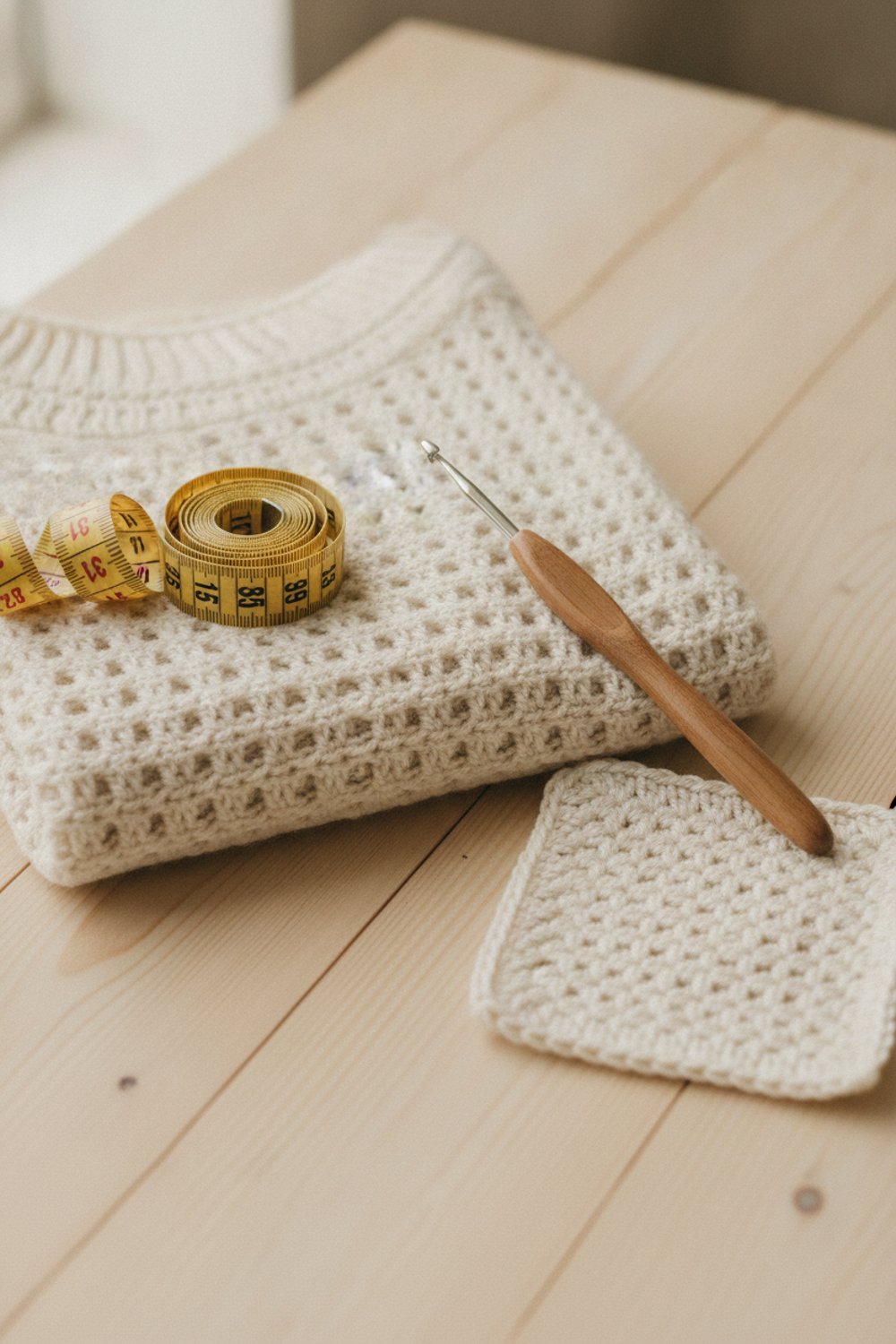
Nothing hurts more than spending weeks on a sweater and finding out it does not fit. The good news is that most fit problems come from two things: picking the wrong size and skipping the gauge swatch. Both are easy to fix once you know how.
This guide gives you a crochet sweater size chart based on the Craft Yarn Council’s standard body measurements, explains ease in plain words, and shows you how to read a pattern’s finished measurements so you choose the right size every time.
What You’ll Need
- Soft fabric measuring tape
- A notebook or a notes app for your measurements
- Your yarn and the hook your pattern calls for
- Ruler or swatch gauge tool
- Stitch markers
- Blocking mat and pins for your swatch
Body Measurements vs. Finished Measurements
This is the part that confuses most people.
- Body measurements are the size of your actual body.
- Finished measurements are the size of the sweater once it is made.
A good pattern lists both, or lists finished measurements and tells you how much ease is built in. The difference between the two numbers is the ease.
Women’s Crochet Sweater Size Chart
These are body measurements in inches from the Craft Yarn Council women’s size chart. Many designers use this chart to grade their patterns.
| Size | Bust | Waist | Hips | Back waist length | Cross back | Sleeve to underarm | Upper arm | Armhole depth |
|---|---|---|---|---|---|---|---|---|
| XS | 28–30 | 23–24 | 33–34 | 16½ | 14–14½ | 16½ | 9¾ | 6–6½ |
| S | 32–34 | 25–26½ | 35–36 | 17 | 14½–15 | 17 | 10¼ | 6½–7 |
| M | 36–38 | 28–30 | 38–40 | 17¼ | 15½–16 | 17 | 11 | 7–7½ |
| L | 40–42 | 32–34 | 42–44 | 17½ | 16½–17 | 17½ | 12 | 7½–8 |
| XL | 44–46 | 36–38 | 46–48 | 17¾ | 17½ | 17½ | 13½ | 8–8½ |
| 2X | 48–50 | 40–42 | 52–53 | 18 | 18 | 18 | 15½ | 8½–9 |
| 3X | 52–54 | 44–45 | 54–55 | 18 | 18 | 18 | 17 | 9–9½ |
| 4X | 56–58 | 46–47 | 56–57 | 18½ | 18½ | 18½ | 18½ | 9½–10 |
| 5X | 60–62 | 49–50 | 61–62 | 18½ | 18½ | 18½ | 18½ | 10–10½ |
Men’s Crochet Sweater Size Chart
From the Craft Yarn Council men’s size chart, in inches:
| Size | Chest | Center back neck-to-wrist | Back waist length | Cross back | Sleeve to underarm |
|---|---|---|---|---|---|
| S | 34–36 | 32–32½ | 23–24 | 15½–16 | 18 |
| M | 38–40 | 33–33½ | 25–26 | 16½–17 | 18½ |
| L | 42–44 | 34–34½ | 26–27 | 17½–18 | 19½ |
| XL | 46–48 | 35–35½ | 28 | 18–18½ | 20 |
| 2X | 50–52 | 36–36½ | 29 | 19–20 | 20½ |
| 3X | 54–56 | 37–37½ | 30 | 20–21 | 20½ |
| 4X | 58–60 | 38–38½ | 30 | 21–21½ | 21 |
| 5X | 62–64 | 39–39½ | 31 | 22–22½ | 21½ |
How to Measure Yourself
Step 1: Wear a thin top or the bra you usually wear under sweaters.
Step 2: Bust or chest: wrap the tape around the fullest part, keeping it level across your back. Snug, not tight.
Step 3: Upper arm: measure around the widest part of your arm, usually just under the armpit. This matters more than people think, since tight sleeves are a common complaint.
Step 4: Length: measure from the top of your shoulder, next to your neck, down to where you want the hem to sit.
Step 5: Cross back: measure across your back from the tip of one shoulder to the other.
Step 6: Write everything down with the date. Bodies change, and it is handy to have your numbers ready for the next project.
Understanding Ease
Ease is the extra room built into a sweater. Lion Brand’s guide to ease uses these ranges:
| Fit | Ease added to your bust/chest |
|---|---|
| Very close | 0 inches |
| Close | 1–2 inches |
| Standard | 2–4 inches |
| Loose | 4–6 inches |
| Oversized | 6 inches and up |
Crochet fabric is usually thicker and less stretchy than knit fabric, so many crochet sweaters are designed with standard to oversized ease. For example, Kima Cardi by TL Yarn Crafts lists finished busts of 46, 54, 60 and 68 inches for an oversized, open-front look.
How to Choose Your Size
Step 1: Find your bust measurement.
Step 2: Decide how you want it to fit. Look at the photos and check the pattern’s ease note.
Step 3: Add the ease to your bust. Example: 38-inch bust + 4 inches of ease = 42 inches.
Step 4: Find the finished bust in the pattern closest to that number. That is your size.
Step 5: Check the length and upper arm too. If the length is wrong, you can often add or remove rows. If the sleeve is too tight, size up the sleeve or add stitches.
Gauge: The Other Half of Fit
Even the right size will not fit if your gauge is off. If the pattern says 12 stitches in 4 inches and you get 13, a 42-inch sweater can come out more than 3 inches smaller.
Step 1: Make a swatch at least 6 inches square in the pattern stitch.
Step 2: Wash and dry it the way you will treat the sweater.
Step 3: Count stitches and rows in the middle 4 inches.
Step 4: More stitches than the pattern? Go up a hook size. Fewer? Go down one. Swatch again.
Common Mistakes (and How to Fix Them)
- Picking your store-bought size letter. Pattern sizes are based on measurements, not clothing tags. Fix: always choose by bust measurement plus ease.
- Confusing body and finished measurements. Fix: check whether the chart says “to fit” or “finished.”
- Skipping the swatch. Fix: swatch, wash and measure before you buy all your yarn.
- Ignoring the upper arm. Fix: compare your upper arm to the sleeve width in the schematic.
- Measuring over a bulky sweater. Fix: measure over thin clothes only.
Tips
- Measure a sweater you already love and compare it to the pattern’s finished measurements.
- If you are between sizes, look at the ease. For an oversized design, size down; for a close fit, size up.
- Read the schematic, the little drawing with numbers. It shows every key measurement.
- Check if the yarn grows when washed. Cotton and superwash wool can stretch.
- Keep your swatch. You can measure it again if the sweater seems to change.
FAQ
What size crochet sweater should I make?
Start with your bust or chest measurement, add the ease you want, and pick the pattern size whose finished bust is closest. Do not go by the letter on your store-bought clothes, because pattern sizes are based on measurements. Then check length and sleeve width too.
How much ease should a crochet sweater have?
It depends on the style. Lion Brand’s guide lists 2–4 inches for standard fit, 4–6 inches for loose, and 6 inches or more for oversized. Most crochet sweaters fall in the standard to oversized range because crochet fabric is thicker and less stretchy than knitting.
Why is my crochet sweater too big?
Usually because your gauge was looser than the pattern’s, or you chose a size with a lot of built-in ease. Some yarns also stretch after washing. Next time, wash your swatch before measuring it, and compare the pattern’s finished bust to your body plus the ease you want.
With the right size and a quick swatch, your next sweater can fit the way you pictured it.